This site uses cookies to improve your browsing experience. we’ll assume you’re OK to continue. If you want to read more about this, please clickPRIVACY ,thank you.
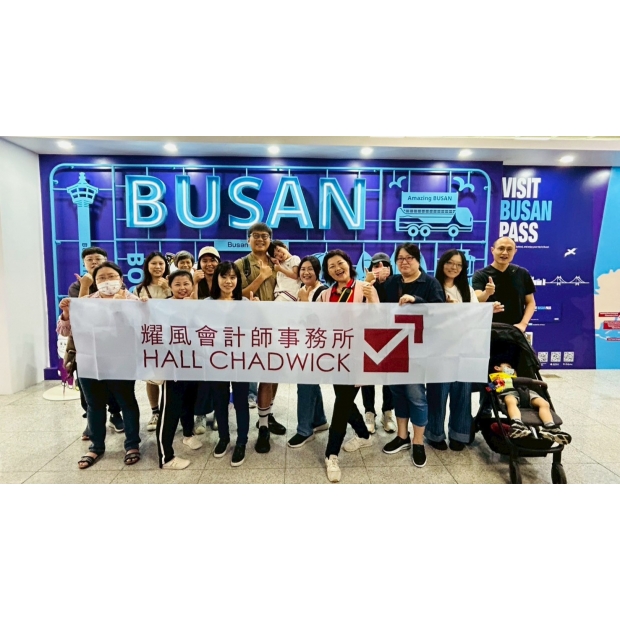
Relax, Recharge, and Reconnect — Hall Chadwick Taiwan 2025 Busan & Gyeongju Company Trip
To thank our teammates for their hard work over the past year and to give everyone a well-deserved break, Hall Chadwick Taiwan organized a company trip in October 2025 to the scenic and culture-filled city of Busan, South Korea. From the moment we set off
From the Waves of California to the Dawn of Arizona — A New Era for Chinese Cuisine in America
Some stories begin with a taste. The saltiness of a bowl of soup, the aroma of a cup of tea — they carry the memories of a people. As more Asia-Pacific enterprises set their sights on the United States, it is not merely for market expansion, but to share the familiar taste of home with the other side of the world.
How Do Fast Fashion’s ESG Accounts Add Up? The Financial and Carbon Logic Behind Double 11 Shopping Festival
According to the United Nations Environment Programme (UNEP), the fashion industry accounts for about 10% of global carbon emissions, and 20% of industrial wastewater comes from textile production. The short-term sales push driven by fast fashion marketing encourages a “produce in bulk, then discount aggressively” cycle, creating severe inventory pressure and high disposal rates. This not only undermines financial soundness but also heightens corporate risks in ESG ratings, particularly in “resource efficiency” and “waste management.
When AI Writes Reports: New Ethics and Risks in Corporate Governance
In many companies, AI has evolved from a supporting tool into a capable colleague that drafts meeting minutes, summarizes financial reports, and prepares sustainability disclosures.
Unveiling Taiwan’s CBAM: Carbon Fees Begin in 2026 — These Industries Must File First!
The Carbon Border Adjustment Mechanism (CBAM) was first introduced by the European Union in 2021 to impose carbon tariffs on high-emission imports, aiming to prevent carbon leakage and safeguard fair competition for domestic industries. While Taiwan’s version of CBAM has yet to be officially named, joint announcements and policy planning by the Ministry of Finance, the Ministry of Environment, and other agencies in 2024 have outlined its framework. It is now taking shape as a key carbon-cost mechanism scheduled to roll out between 2026 and 2027.
From Workplace Trust to Institutional Trust — The Subtle Logic of Japanese Management Culture
In Japanese corporate management, trust has long been regarded as the cornerstone of organizational stability. It exists within interpersonal relationships and a sense of collective responsibility, functioning as an informal yet effective management mecha
Taiwanese Businesses Investing in the U.S.: How to Effectively Reduce the 30% Dividend Withholding Tax
For many Taiwanese enterprises, the 30% U.S. withholding tax on outbound dividends often becomes a hidden burden on overseas investment returns. However, with the right corporate structure and proper application of tax treaties, this 30% rate is not necessarily immutable.
The Wave of Side Jobs in Japan: Lessons for Taiwan
For decades, Japanese companies strictly prohibited employees from engaging in side jobs. Most employment regulations explicitly stated that workers were not allowed to take on additional work, citing the need to focus on one’s primary role and avoid conf
Supply Chain ESG Audits: A Comprehensive Strategy from Board Governance to Financial Implementation
Amid increasingly stringent global ESG (Environmental, Social, and Governance) regulations, supply chains are no longer just a matter for procurement departments but have become one of the core risks directly influencing board-level decisions. With IFRS S1 and S2, along with the EU’s CSRD, imposing higher transparency requirements on “supply chain disclosures,” supply chain audits have been elevated to a governance issue, directly tied to corporate financial reporting and market credibility.
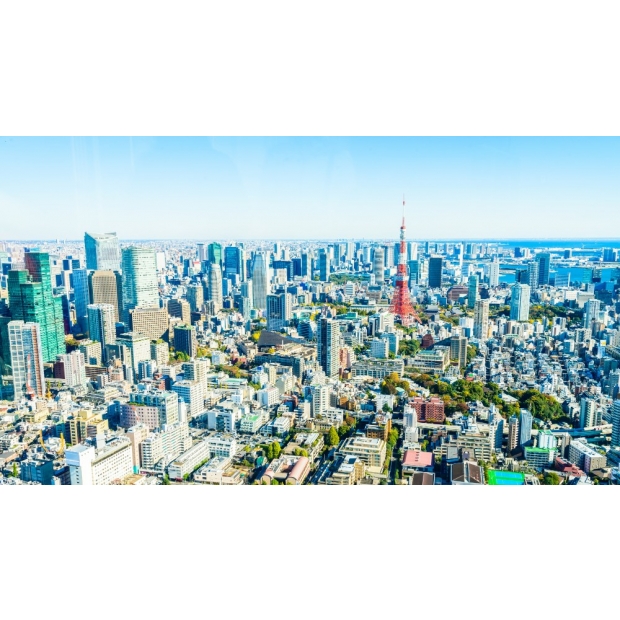
Japan’s Venture Capital and Finance: The Rise of New Forces
When people think of Japan’s financial market, the image that often comes to mind is one dominated by large banks and conglomerates—stable but rigid. Despite abundant capital, funds have traditionally flowed into conservative avenues, making innovation difficult. Yet cracks are beginning to appear in this long-standing image of conservatism.
U.S. IPOs: A Global Passport for Taiwanese Companies
More and more Taiwanese companies have turned their attention to the U.S. capital markets. Whether on the New York Stock Exchange (NYSE) or NASDAQ, a U.S. IPO is regarded as a decisive step toward global expansion. With its massive scale, deep liquidity, and diverse investor base, the U.S. market not only enables companies to secure higher valuations but also significantly boosts their international visibility. For many businesses, it is more than fundraising—it is an endorsement of their brand on the world stage.
New ESG Risk Trends in Taiwan 2025: From Climate Change to Natural Capital
The year 2025 will mark a new watershed for Taiwanese companies in disclosing ESG risks. While many firms have already begun addressing issues such as carbon emissions and energy use, global trends indicate that focusing solely on single environmental top.

 Relax, Recharge, and Reconnect — Hall Chadwick Taiwan 2025 Busan & Gyeongju Company Trip
 From the Waves of California to the Dawn of Arizona — A New Era for Chinese Cuisine in America
 How Do Fast Fashion’s ESG Accounts Add Up? The Financial and Carbon Logic Behind Double 11 Shopping Festival
 When AI Writes Reports: New Ethics and Risks in Corporate Governance
 Unveiling Taiwan’s CBAM: Carbon Fees Begin in 2026 — These Industries Must File First!
 From Workplace Trust to Institutional Trust — The Subtle Logic of Japanese Management Culture
 Taiwanese Businesses Investing in the U.S.: How to Effectively Reduce the 30% Dividend Withholding Tax
 The Wave of Side Jobs in Japan: Lessons for Taiwan
 Supply Chain ESG Audits: A Comprehensive Strategy from Board Governance to Financial Implementation
 Japan’s Venture Capital and Finance: The Rise of New Forces
 U.S. IPOs: A Global Passport for Taiwanese Companies
 New ESG Risk Trends in Taiwan 2025: From Climate Change to Natural Capital