
Within the logic of capital markets, emotion is often no more than a short-term fluctuation; it is institutional resilience that ultimately shapes long-term valuation.
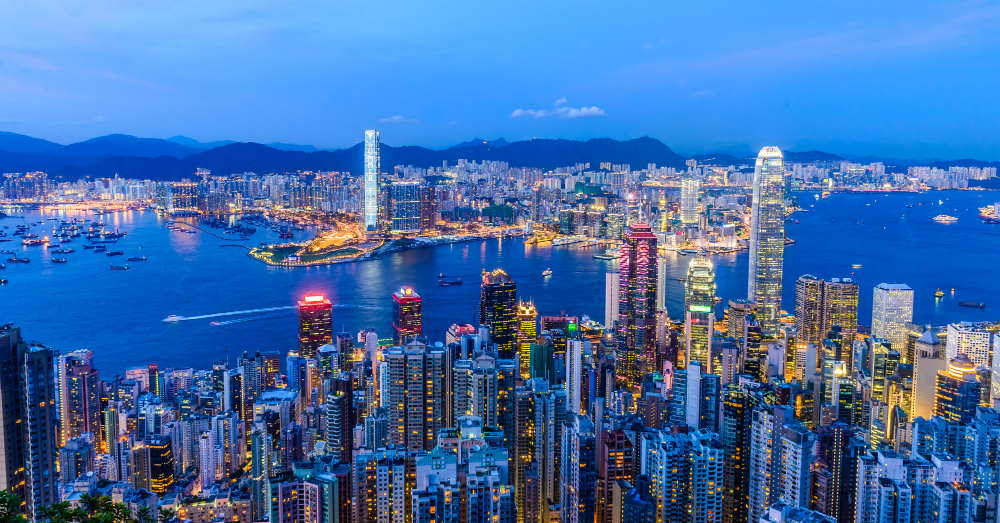
In 2026, standing at the Central Pier and gazing across Victoria Harbour, the skyline appears unchanged. Yet beneath the surface, shifting currents have already redrawn the shipping lanes. Since the implementation of the National Security Law in 2020, international skepticism toward Hong Kong has hardly subsided. However, if we step away from binary political narratives, it becomes clear that Hong Kong is now engaged in a high-stakes experiment in trust. Its latest instrument: the wave of policy incentives for Family Offices rolled out intensively in 2025.
I. The Underlying Reality: Has the Institutional Framework Fundamentally Changed?
From a professional market perspective, there has been no fundamental rupture in Hong Kong’s core financial institutions. The common law system continues to command credibility in commercial and financial adjudication, and the legal predictability surrounding asset protection and trust structures remains intact. More importantly, the free flow of capital and the Linked Exchange Rate System continue to serve as its most solid foundations. For multinational capital, Hong Kong today resembles a “safe haven under stress testing”—subject to external political pressures, yet with its internal transactional mechanisms still functioning with precision and agility.
II. The 2025 Policy Dividend: Qualitative and Quantitative Shifts in Family Offices
What has truly prompted investors to reassess Hong Kong is the series of assertive enhancement measures for Family Offices introduced in the 2025 Budget. These initiatives go beyond tax concessions; they represent a comprehensive alignment with emerging asset trends and the future architecture of global wealth management.
- A “Leap” in Asset Classes: Starting in 2025, the Hong Kong government significantly expanded the scope of qualifying assets eligible for profits tax exemption under Single Family Offices (SFOs). Beyond traditional equities and bonds, the exemption list now includes virtual assets (cryptocurrencies), precious metals, specified commodities, overseas real estate, and even carbon credits. This development enables family offices to leverage Hong Kong as a comprehensive asset allocation and management hub, achieving optimal tax efficiency across diversified portfolios.
- Synergy with the New Capital Investment Entrant Scheme (CIES): As of March 2025, applicants are permitted to hold qualifying investment assets through a wholly owned private company. This structural adjustment creates a seamless synergy between “relocating to Hong Kong” and “establishing a family office.” Investors can secure residency status while simultaneously leveraging a qualified family office structure to benefit from profits tax exemption.
- Strategic Adjustment of Operational Thresholds: In contrast to the multi-tiered and often complex tax regimes found in neighboring jurisdictions, Hong Kong continues to uphold a clear and straightforward framework. As long as an entity employs at least two full-time staff in Hong Kong, incurs no less than HKD 2 million in annual operating expenditure, and maintains net assets under management of at least HKD 240 million, it may apply for profits tax exemption. This “simple and transparent” institutional advantage has, in 2025, attracted a significant number of Chinese family offices that had previously remained on the sidelines.
III. How Is Hong Kong Responding to Global Skepticism?
In the face of international scrutiny, the Hong Kong government has moved beyond rhetorical defense and instead chosen to respond through economic substance. As of the end of 2025, more than 3,300 family offices have established a presence in Hong Kong. Market behavior is often more candid than political commentary: if judicial integrity or capital security were truly compromised, these 3,300 of the world’s most sophisticated stewards of wealth would not be concentrating their capital here.
Hong Kong is also reinforcing its unique position as China’s connector to global markets. While Singapore focuses primarily on Southeast Asia, Hong Kong’s distinct value lies in its dual identity—anchored in the international common law system while hosting the world’s largest offshore renminbi liquidity pool. For families whose asset base is centered in the Asia-Pacific region and who are optimistic about digital assets and ESG investments, post-2025 Hong Kong offers a more flexible platform for capital reallocation.
Hong Kong is also reinforcing its unique position as China’s connector to global markets. While Singapore focuses primarily on Southeast Asia, Hong Kong’s distinct value lies in its dual identity—anchored in the international common law system while hosting the world’s largest offshore renminbi liquidity pool. For families whose asset base is centered in the Asia-Pacific region and who are optimistic about digital assets and ESG investments, post-2025 Hong Kong offers a more flexible platform for capital reallocation.
IV. Conclusion: Seeking the Optimal Balance in a Gray Zone
Is Hong Kong still worth investing in? This is no longer merely a question of trust, but one of allocation value.
We must confront reality: Hong Kong has evolved from being the West’s primary gateway to the East into a capital node recalibrating its position within shifting geopolitical realities. It is no longer purely one thing—but it has become more intentional and strategically defined.
For Taiwanese enterprises and family capital, the key issue is not whether to believe in Hong Kong, but how to generate returns within institutional divergence. With the support of the 2025 policy incentives, leveraging Hong Kong’s structural framework to mitigate the impact of global tax transparency measures—such as CFC regimes—while positioning for emerging asset classes has become an essential discipline for professional investors.
Advancing amid skepticism may well be the most authentic—and most resilient—expression of Hong Kong today.
We must confront reality: Hong Kong has evolved from being the West’s primary gateway to the East into a capital node recalibrating its position within shifting geopolitical realities. It is no longer purely one thing—but it has become more intentional and strategically defined.
For Taiwanese enterprises and family capital, the key issue is not whether to believe in Hong Kong, but how to generate returns within institutional divergence. With the support of the 2025 policy incentives, leveraging Hong Kong’s structural framework to mitigate the impact of global tax transparency measures—such as CFC regimes—while positioning for emerging asset classes has become an essential discipline for professional investors.
Advancing amid skepticism may well be the most authentic—and most resilient—expression of Hong Kong today.
Hall Chadwick Taiwan Question:
Do Hong Kong’s 2025 tax exemptions for virtual assets and overseas real estate create a new “profit buffer zone” within your cross-border structure? A true safe haven often emerges in the space where the rule of law and policy transparency intersect.